MoPOP CEO Michele Y. Smith On Leading With Culture And Power
‘Authenticity Is The New Flex’ — Meet CEO Michele Y. Smith, The Black Woman Bringing Real Culture To MOPOP [Exclusive]

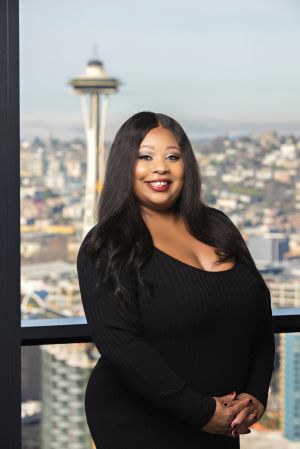
For over 25 years, the Museum of Pop Culture, coined MOPOP, has been the home of popular culture in the United States. Located in Seattle, the trendy institution (10-plus exhibitions and 80,000-plus artifacts) is a place for sci-fi fans, gamers, hip-hop heads, and beyond, drawing over 500,000 annual visitors. Film, music, fashion, and gaming all exist at the museum in the form of interactive storytelling. Last summer, MOPOP celebrated its silver jubilee with “MOPOP25: A Quarter Century of Culture.” Planned a year in advance, the MOPOP25 commemoration featured all-day activations for attendees of all ages.
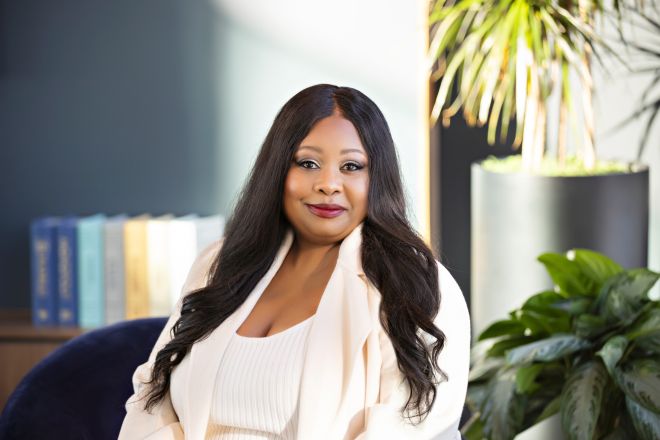
At the forefront of MOPOP is Michele Y. Smith, formerly the Chief Business & Financial Officer at the Woodland Park Zoo, an award-winning cultural landscape. Smith is also a 2024 Silver Stevie Award recipient for “Non-Profit Woman of the Year.” In her words, “pop culture has always been in my DNA.”
The MOPOP executive is a proud Philly native, former instrumentalist and daughter of one of the first Black ballerinas. Part of Smith’s mission is to highlight the arts and emphasize the importance of Black contributions to the American zeitgeist. “It’s important for me to be relevant and keep up with what’s going on in the global community of culture,” she explains. “…Don’t let the CEO fool you [laughs], I’m 5% CEO, the rest is Michele Y. Smith from Philadelphia.”
RELATED CONTENT: At Brookyn Museum, African-American Artworks Pre-1945
The head of MOPOP spoke exclusively to Madame Noire about leadership, success, and the future of inclusion in the arts and culture world.
Madame Noire: I know that you wake up super early and you’re really big on routine. Our audience would love to know what a day in your life looks like. Walk us through your day from the 4:30/5:00 am wake-up, to wellness, and diving into work emails.
Michele Y. Smith: Sure, my usual wake-up is at 4:30 because I have a 5:30 private pilates appointment at Equinox. And for me, it’s important to start my day right by stretching and getting myself together. I’m usually back-to-back every day. And after work, I’m usually either out, maybe with a donor, or doing an event at the museum. I know that if I’m going to get any of my wellness in, I have to start in the morning. And I have to start with a routine. I usually get up, get myself together, drink water with some creatine, and then hop in the car and go down the street for my pilates appointment.
Then I’m done by 6:30, back in my apartment. I’m just having my coffee, getting myself ready for the day, and really taking that time to ground myself. No. 1, “What are my goals for the day?” No. 2, kind of just journaling and manifesting things that I want to do for my personal life. I always look towards the day to put “What are the three things that I want to do for myself?” and “What are some of the three priority things that I need to get done for the role that I’m in?”
I know your approach [in the workplace] is very wellness first. Does that trickle down to staff as well? I’m pretty sure you encourage them to “take the time that you need.“
Our employees are our biggest asset. And if you’re not well, I don’t want you to come to work unwell. I believe in making sure you take time off for vacation. I make sure that you’re working out and having wellness for yourself, to show up to work authentically and present for what you need. And if you’re sick, please stay home. We don’t want to get sick, but also we want you to get your rest. The other thing I prioritize is making sure that when you’re off work, you’re off work.
You don’t need to answer the emails. You have a team that you can delegate to. You also have the out-of-office [notification] that lets people know what you’re doing. So set yourself up for success. Right now, there’s so much burnout going on, and I want people to be able to take the time, not feel guilty. Then after work, not have to answer emails after six. We’re a museum, we’re not a hospital. So I want to make sure that people take that time to be with their families.
Interestingly, as a CEO, you’re really tapped into culture–which makes sense for this role. But are people surprised by that? Even though it’s a pop culture role, are people surprised that you’re so “cool?”
You know, pop culture has always been in my DNA. I believe that I need to keep up with the culture. I need to create with the culture, understand what the culture is talking about, and talk about what’s going on. It’s funny, I usually come into the office, and I talk to the team. I’m like, “Did you see what was on TikTok?” And some of them are like, “I don’t even have accounts.” And I’m like, “Well, I’m going to show this in the meeting, because this is relevant to what we’re talking about.”
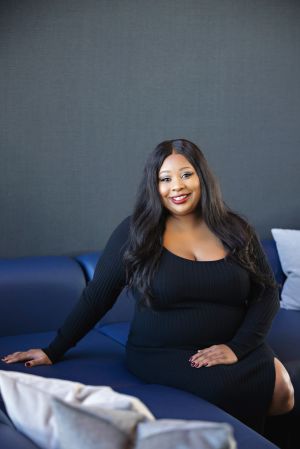
So for me, I’ve always been that way. I love fashion, I love film, I love art, and so it’s just immersing myself [in culture]. It helps me create. It helps me with my vision, with the museum, and it helps us keep up with what’s going on. Because it’s always fluent and evergoing. So, for me, I think it’s an important part of my job. There’s always the business aspects. But to get on phone calls, or if you’re in panels, people are asking you about what’s relevantly going on in culture now or in the past. It’s important for me to be relevant and keep up with what’s going on in the global community of culture.
Can you talk to me a little bit about growing up in Philly? Because that’s a cultural hub within itself.
Interestingly enough, I’m from West Philadelphia. I’m a big Jill Scott fan. I was born in the ’70s when hip hop was just starting to resonate and be brought up. So there’s Philly all in me. Don’t let the CEO fool you [laughs], I’m 5% CEO the rest is Michele Y. Smith from Philadelphia. And my mom, my family [were] born and raised in Philadelphia. She [my mom] was one of the first Black ballerinas in Philadelphia. My DNA has been formed in the Motown Philly residence.
I was always in the culture of learning and going up to New York. And as you know, you can go from Philly to Delaware, to Maryland to DC, to New York to Boston…I’ve been going to house parties since I wasn’t supposed to be going to house parties. It’s funny, I talked to my brother…he’s like, “You are in the perfect job, because you were always out in the culture, getting in trouble and sneaking out or going to house parties, or going up to New York to see a new show.” Different things like that. And so, it really has stuck with me my whole life. I believe that I’m in my perfect role as the CEO of the Museum of Pop Culture.
How can we make the arts more inclusive and accessible?
I think that pop culture is a part of everyone’s identity—art, dance, and ballet. I was afforded the opportunity to be invited into some of these things from a very young age. One of the things that we do at the museum is that we travel exhibits around the world to really talk about pop culture or art or dance or opera within some of the exhibits that we do.
Back then, at the Harlem Academy of Dance, or AV Dance, those [are the] areas that we need to continue to fund, invest and bring marginalized kids through those programs. Unfortunately, right now, with federal funding, that’s not an area that is being funded. But with private funding, really educating and getting that out so people understand the discipline behind being a dancer. That’s getting up very early in the morning, practicing the resilience behind it, the artwork is a craft in itself.
I think [also] there’s no culture without Black culture. What’s your take on that?
I agree. We have our latest exhibit in the museum that’s done by Adeerya [Johnson], one of the few Black curators in the museum world, Never Turn Back: Echoes of African American Music. It really focuses on gospel, blues, and jazz, and how they actually shaped American culture and used music as instruments of resistance and identity.
That’s an exhibit right now that you can go see at MOPOP. It also has a very great interactive that really talks about how the song in jazz is mixed into the renaissance of what Beyoncé is doing today, and really tells those stories that haven’t been told, showing how Black culture has shaped music. And [it] really takes you all the way through from our permanent collection to now, to where you’re seeing Beyoncé and some of the other great artists out there using and sampling some of the music that was shaping music back when they were not even born.
RELATED CONTENT: It’s Giving Masterpiece! 10 Black Female Artists And Sculptors You Should Know This National Art Day
We’re halfway through the 2020s. What were some of your favorite pop culture moments that we’ve seen thus far over the past few years?
I think you wouldn’t be able to talk about pop culture [without the past]. During my time, Madonna was really, really big with Vogue and fashion– Lenny Kravitz is a really big instrumental part of my life with focusing on women empowerment. His mom, Roxie [Roker], was also an actress herself. And so those things kind of resonate through me. Michael Jackson coming out was a really big thing that turned into a play on Broadway. And all those things coming all the way up through the ’90s. Motown, Whitney Houston, all shaped my career. But also taking us all the way through [to today], has been fantastic and has had an impact on my life through pop culture.
Is there anything that you would want to see? Like, “This is what I would want to see in my lifetime.“
I think we’re just getting started. Seeing Kendrick Lamar do the Super Bowl, Beyoncé do the Super Bowl, and then Bad Bunny, I think that we’re just getting started. We haven’t had that platform in a long time. And I think that this is just building for the people that come after those artists; another platform to be even bigger and better. What I’d like to continue to see is more representation in some of these big Super Bowls (Halftime shows), or Oscars, or award shows to be a little bit more prevalent.
What advice would you give anyone who aspires to be in the C-Suite, particularly women or a person of color?
I would say, believe in yourself, that your voice is powerful and your perspective is valuable. And that you need to embrace your unique identity. Stay curious. Cultivate a sense of curiosity and passion for learning. Be resilient—is a big one. The journey to leadership will always come with obstacles; but learn to embrace those setbacks as opportunities for growth and always seek some mentorship.
Surround yourself with mentors that are role models who can provide guidance and support—I love to mentor women. And then board your own path. Know that your journey is yours alone. Don’t feel pressured to fit a specific bowl. Be bold and innovative in your own approach and then advocate for change. Use your voice to speak out against injustice and to advocate against those who may not have the same platform.
RELATED CONTENT: Portia Powell On Making History As The 1st Black Woman CEO Of One Detroit Credit Union: ‘Too Often Finances Are Secret’ [Exclusive]
‘Authenticity Is The New Flex’ — Meet CEO Michele Y. Smith, The Black Woman Bringing Real Culture To MOPOP [Exclusive] was originally published on madamenoire.com