Nikki M. James On Making 'Little Shop Of Horrors' History
Tony Winner Nikki M. James On Making 'Little Shop Of Horrors' History Alongside Jordan Fisher As First Black Leading Couple [Exclusive] - Page 3

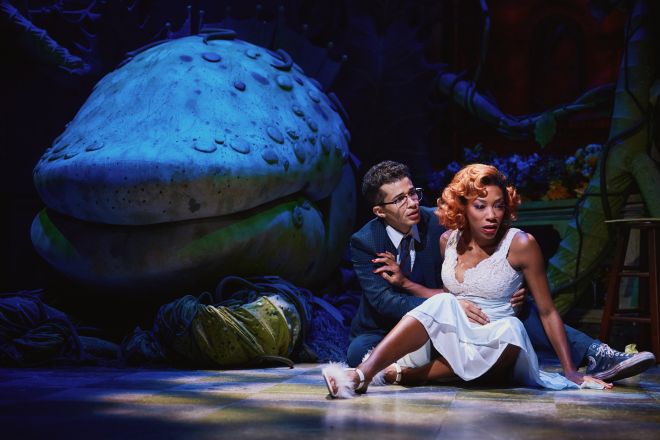
When the curtains rise on the current Off-Broadway revival of Little Shop of Horrors, audiences are treated to a cultural milestone hiding in plain sight. For the first time, the central romantic duo of Audrey and Seymour is led by two Black actors: Tony Award-winner Nikki M. James and Jordan Fisher. It is a striking evolution for a musical that has spent more than forty years cemented in a specific, mid-century white aesthetic. Yet, stepping into the iconic blonde, high-heeled shoes of Audrey felt like a natural homecoming for James, who recently spoke to MadameNoire.
“Audrey is a role that, although I stepped into it with such ease—I mean, I feel like I put on that black dress and those high heel shoes, and I knew exactly who she was—yet, it was never a role that was on my bingo card because I’d always seen non-people of color play this part,” James reflects. “And when it occurred—when I got the offer, I thought, ‘Oh my god, yes, that’s perfect.’ I love that in my 25 years in this business, both the business has changed enough that people are starting to go out of the boxes that they assume shows or roles or characters are meant to be played by certain people. And I also love that I’m still being surprised, that I’ve created a body of work that other people see me as things that I haven’t even seen in myself yet. There’s something really amazing when a person says, ‘You’d be great at this,’ and you think, ‘Really?’ and then you are. That means that I’ve created a body of work and also relationships with directors and musical directors where people respect me, and they’re thinking about me in ways that I’m not even thinking about for myself. I’ve put my own self in a box and other people are helping me bust out.”
RELATED CONTENT: ‘Two Strangers’ Star Christiani Pitts Confronts The Fear Of Being Fully Seen As A Black Woman On Broadway — ‘It’s So Scary’ [Exclusive]
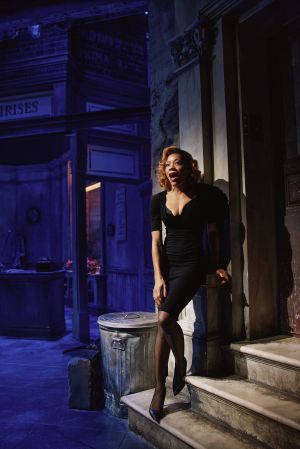
Rejecting Laughs for Domestic Abuse
Perhaps the most profound choice James made in taking on the role was her refusal to treat Audrey’s turbulent domestic reality as humor. Historically, Audrey’s relationship with Orin Scrivello has been played with a comedic edge. James firmly drew a boundary, choosing instead to lean into the sobering weight of intimate partner violence.
“It’s not the funniest part of the story to tell, but I really didn’t want my performance for any of those moments that she is in, where she is receiving physical abuse from her partner, her boyfriend, to be played for a laugh. So, I’m not saying other people haven’t done that, but that was a very serious and important storyline for me and a plot point. She is really afraid of Orin. She starts the show with a black eye, and at one point she has a broken arm—or she has at least her arm in a cast, some kind of sprained cast—and these are all injuries she’s sustained from her boyfriend. I really try not to play that for laughs.”
The artistic risk was immediately vindicated by the audience’s real-world response. James recounts an emotional encounter at the stage door that solidified the necessity of her creative choices: “I felt really rewarded in that. I was signing autographs on the autograph line, and a young woman—I was signing her Playbill—and she said, ‘This show changed my life.’ Not this production, but this show, Little Shop, changed my life. I said, ‘Oh, that’s sweet.’ And she said, ‘No, I know many people say that, but I was in an abusive relationship, and I found this show, and it was actually through this show that I was able to see that I was in a relationship that was abusive, and I got out of it because of this show.’ That’s when I realized that I’m doing that part of this show, of that Audrey, for women like that.”
Joy as a Radical Practice
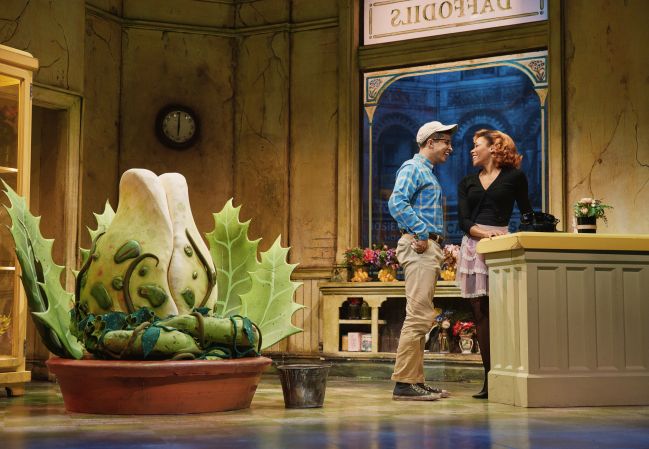
This philosophy of deep presence is heavily reinforced by her life as a mother. “It’s so fleeting. My daughter’s three and a half… you actually forget how short they’re babies for. It’s so hard. They don’t sleep, you don’t know them, you’re worried every minute. But it’s such a short period of time, and to be wishing any of those moments away is like—there’s arrogance in that, because you’re going to be at a point when you’re going to miss these moments. When my kid is still asking me to rub her back for 30 minutes…in five years she might be like, ‘Get out of my room.’ So, I try to just have a sense of humor about all of it.”
Ultimately, James’s current professional and personal outlook is rooted in a piece of wisdom passed down through her theater community—a lesson on choosing joy through the inevitable seasons of hardship. She recalls a conversation regarding a longtime colleague from her Book of Mormon days, John Eric Parker, who recently endured the tragic loss of his husband to cancer.
“We call John Eric the Oracle,” James shares softly. “Another friend was talking about John Eric and said, ‘He’s so wise,’ and I was trying to figure out why he is so wise. And this is what I came up with: which is that all of the hard things in his life that he’s going through, you can just see that he focuses on still finding joy, and still being able to laugh, and using all of these hard things as lessons to find more joy and not as an opportunity to be down or to be negative or to blame or jealous. I want that kind of life. I want to have the good and the bad also help me find joy in my life. That’s a real lesson for this time in my life, too—this sort of stroke of luck I’ve had career-wise the past few months.”
As Little Shop of Horrors continues to draw packed houses, James hopes audiences leave with an appreciation for the vocal execution and socio-political layers wrapped up in camp. “I hope that they think that we sound fierce,” she smiles. “This is a singer’s singing show. There’s lots of singing in this. I think the show is a little bit of an allegory about the ills of desire for fame and fortune. Seymour kind of sells his soul to the devil a little bit… it can be a slippery slope when you’re trying to reach the highest highs. But I hope people just have a really good time and laugh.”
Beyond the laughs, the vocals, and the puppetry, James recognizes that her very presence on that stage signifies a shift in the theater world. Black women are no longer forced to stay within designated lanes, but are empowered to rewrite the classics entirely on their own terms.
“We joke that it’s weird—it’s somehow become a Black show,” James concludes. “It’s an amazing thing to see representation and people of color in starring roles in New York City in these classic musicals. It is really something special, and not to be ignored or glossed over. It’s really special.”
Little Shop of Horrors is currently running Off-Broadway at the Westside Theatre.
RELATED CONTENT: “Purple Rain” Is Being Turned Into A Musical For Broadway
Tony Winner Nikki M. James On Making 'Little Shop Of Horrors' History Alongside Jordan Fisher As First Black Leading Couple [Exclusive] - Page 3 was originally published on madamenoire.com